


From automotive garages and warehouses to retail stores and modern homes, Epoxy Flooring has become a popular solution for spaces that demand durability and a clean, professional appearance. Rather than acting as a traditional Floor Covering, epoxy creates a tough protective surface that bonds directly to the underlying Concrete Flooring. The result is a seamless floor designed to handle heavy traffic, impacts, spills, and daily wear.
Today, epoxy is available in a variety of finishes and styles, ranging from simple solid-color coatings to decorative metallic and flake systems. Its combination of strength, low maintenance requirements, and visual appeal has made it a preferred option for both Commercial Flooring and Industrial Flooring environments. Understanding how epoxy flooring works can help determine whether it is the right choice for your space.
What Is Epoxy Flooring?
Epoxy Flooring is a high-performance flooring system created by combining epoxy resin and a hardener to form a strong, durable surface. Unlike traditional Floor Covering materials that sit on top of a floor, epoxy bonds directly to the underlying Concrete Flooring, creating a seamless and protective layer.
Key characteristics include excellent Abrasion Resistance, Impact Resistance, chemical resistance, and easy maintenance. It also provides a smooth, attractive finish suitable for a variety of environments.
What makes epoxy different from traditional flooring is its ability to function as both a protective coating and a durable flooring surface, making it popular in Commercial Flooring, Industrial Flooring, and residential garage applications.
What Is Epoxy Flooring Made Of?
Epoxy Flooring is not made from a single material. Instead, it is created through a combination of specialized components that work together to form a durable and long-lasting surface. These materials are designed to create a strong Resin Flooring system capable of handling demanding environments.
Epoxy Resin
Epoxy resin is the primary ingredient in the flooring system. It serves as the base material that provides strength, adhesion, and durability. When applied to a properly prepared Concrete Flooring surface, the resin helps create a seamless layer that can withstand daily wear, heavy traffic, and exposure to various substances.
Hardener
The hardener is the component that activates the curing process. When mixed with epoxy resin, a chemical reaction occurs that transforms the liquid materials into a solid and durable flooring surface. The quality and ratio of the hardener directly affect the strength, performance, and longevity of the finished floor.
Resin Flooring System
Together, the epoxy resin and hardener form a Resin Flooring system. This system creates a protective surface that bonds tightly to the Substrate, typically concrete. The resulting floor offers excellent Abrasion Resistance, Impact Resistance, and durability. Depending on the application, additional materials such as decorative flakes, pigments, or anti-slip additives may be incorporated to enhance both appearance and performance.
How Does Epoxy Flooring Work?
Epoxy Flooring works by creating a strong bond between the epoxy coating and the floor beneath it. Once applied and cured, the material forms a durable surface that protects the underlying concrete while improving its appearance and performance. This unique process is what makes epoxy different from many traditional flooring solutions.
Bonding to Concrete Flooring
The first step is adhesion. During installation, the epoxy mixture penetrates and bonds to the prepared Concrete Flooring surface. This strong connection helps prevent peeling, separation, and premature wear. Proper surface preparation is essential to ensure the coating adheres correctly and delivers long-term durability.
Seamless Surface Creation
As the epoxy cures, it forms a smooth and seamless surface without grout lines, joints, or gaps. This continuous finish not only creates a clean and professional appearance but also reduces places where dirt, moisture, and bacteria can accumulate. The seamless design is one reason epoxy is commonly used in Commercial Flooring and Industrial Flooring environments.
Protective Coating Benefits
Once cured, the epoxy acts as a protective coating that shields the concrete from abrasion, impacts, stains, chemicals, and everyday wear. It enhances the floor’s Abrasion Resistance and Impact Resistance while helping extend the lifespan of the underlying surface. This protective layer is what allows Epoxy Flooring to perform reliably in demanding residential, commercial, and industrial settings.
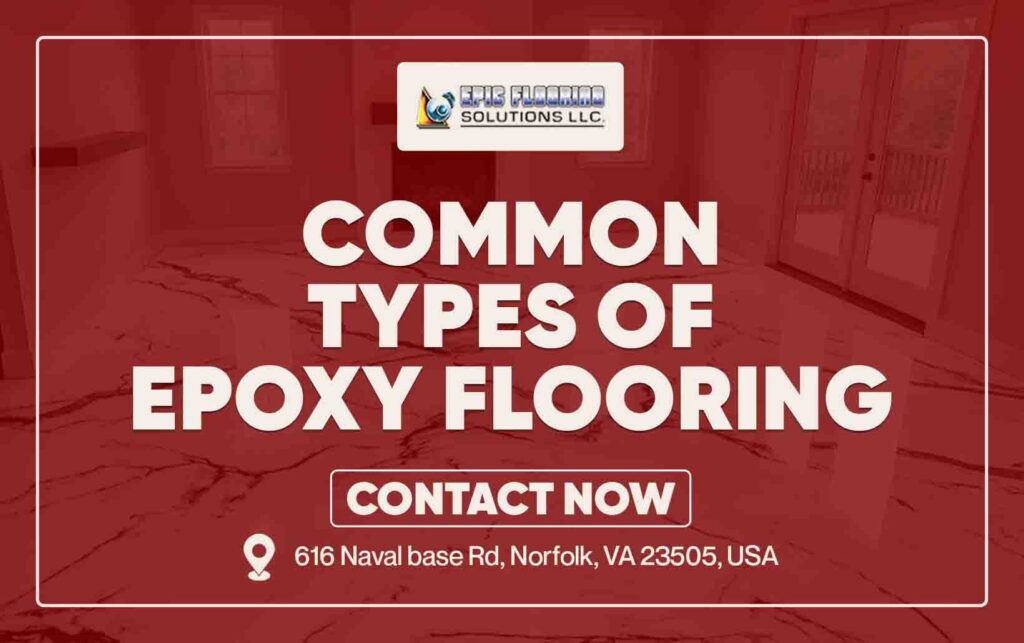
Common Types of Epoxy Flooring
Epoxy Flooring is available in several specialized systems designed for different performance and design requirements. Each type offers unique characteristics that make it suitable for specific residential, commercial, or industrial applications.
Self-Leveling Epoxy
Self-leveling epoxy is designed to flow across the floor surface and create a smooth, even finish. It is commonly applied over new or existing Concrete Flooring to conceal minor imperfections and create a seamless appearance. This type is frequently used in showrooms, commercial facilities, warehouses, and healthcare environments where a clean and professional look is desired.
Flake Epoxy
Flake epoxy incorporates decorative vinyl flakes into the coating system to create texture and visual depth. The flakes are available in various colors and sizes, allowing for customized designs. In addition to improving appearance, flake systems can enhance Slip Resistance and help conceal dirt, scratches, and surface imperfections. They are particularly popular in garages, retail spaces, and recreational facilities.
Quartz Epoxy
Quartz epoxy combines colored quartz granules with epoxy resin to create a highly durable flooring system. This type offers excellent Abrasion Resistance, chemical resistance, and Slip Resistance, making it suitable for demanding environments. Quartz epoxy is commonly installed in schools, healthcare facilities, locker rooms, and commercial kitchens where both durability and safety are important.
Metallic Epoxy
Metallic epoxy is known for its distinctive decorative appearance. Metallic pigments are blended into the epoxy coating to create unique visual effects that resemble marble, flowing water, or polished stone. No two metallic epoxy floors look exactly alike, making them a popular choice for luxury homes, restaurants, retail stores, and modern commercial spaces.
Mortar Epoxy
Mortar epoxy is the strongest and most heavy-duty epoxy flooring system available. It combines epoxy resin with graded aggregates to create an extremely durable surface capable of handling heavy machinery, impact loads, and continuous industrial use. Because of its exceptional strength, mortar epoxy is commonly used in manufacturing facilities, warehouses, and other Industrial Flooring environments where maximum performance is required.
Why Is Epoxy Flooring So Popular?
Epoxy Flooring has become a popular choice across residential, commercial, and industrial settings because it combines performance with visual appeal. Its ability to withstand demanding conditions while maintaining a clean appearance makes it a practical flooring solution for many environments.
Durability
One of the primary reasons people choose Epoxy Flooring is its exceptional durability. Once cured, the surface can withstand heavy foot traffic, equipment movement, impacts, and daily wear. Its strong Abrasion Resistance and Impact Resistance make it suitable for garages, warehouses, manufacturing facilities, and busy commercial spaces where long-lasting performance is essential.
Easy Maintenance
Epoxy flooring requires relatively little maintenance compared to many traditional flooring materials. The seamless surface prevents dirt, dust, and debris from collecting in joints or grout lines. Routine sweeping and occasional mopping are often enough to keep the floor looking clean. Its resistance to stains and spills also simplifies maintenance in demanding environments.
Modern Appearance
In addition to its performance benefits, epoxy offers a sleek and contemporary appearance. Available in a variety of colors, textures, decorative flakes, and metallic finishes, it can be customized to suit different design preferences. The smooth, seamless finish creates a clean and professional look that works well in both commercial facilities and modern residential spaces.
Long-Term Value
While the initial installation cost may be higher than some flooring options, Epoxy Flooring often delivers strong long-term value. Its durability reduces the need for frequent repairs or replacement, while its low maintenance requirements help minimize ongoing costs. For property owners seeking a flooring solution that combines longevity, appearance, and performance, epoxy can be a cost-effective investment over the life of the floor.

Where Can Epoxy Flooring Be Installed?
Epoxy Flooring is valued for its versatility and can be installed in a wide range of environments. Its durability, seamless finish, and resistance to wear make it suitable for spaces that experience everything from light residential use to heavy industrial traffic.
Garages
Garages are among the most common applications for Epoxy Flooring. The coating helps protect concrete surfaces from vehicle traffic, oil stains, chemicals, and everyday wear. Its easy-to-clean surface and professional appearance make it a popular upgrade for both residential and commercial garages.
Commercial Flooring
Many businesses choose epoxy for Commercial Flooring because it combines durability with a clean, attractive appearance. Retail stores, restaurants, healthcare facilities, offices, and educational institutions often use epoxy floors to create professional environments that can withstand daily foot traffic while remaining easy to maintain.
Industrial Flooring
Industrial Flooring environments demand exceptional performance, and epoxy is designed to meet those requirements. Manufacturing plants, processing facilities, and production areas frequently use epoxy systems because of their Abrasion Resistance, Impact Resistance, and ability to withstand demanding operating conditions.
Warehouses
Warehouses experience constant movement from forklifts, pallet jacks, equipment, and heavy foot traffic. Epoxy Flooring provides a durable surface capable of handling these challenges while helping reduce dust from exposed concrete. Its seamless finish also simplifies cleaning and ongoing maintenance throughout large facilities.
Showrooms
Showrooms often require flooring that is both functional and visually appealing. Epoxy coatings can be customized with decorative flakes, metallic effects, and high-gloss finishes to create a modern and polished appearance. Whether used in automotive showrooms, retail spaces, or exhibition areas, epoxy flooring helps enhance the presentation of products while delivering long-term durability.

What Makes Epoxy Flooring Durable?
Epoxy Flooring is engineered to handle demanding environments where ordinary flooring materials may wear out quickly. Its unique composition and strong bond with the underlying surface create a flooring system designed for long-term performance. Several key characteristics contribute to its reputation for durability.
Abrasion Resistance
One of the biggest strengths of Epoxy Flooring is its excellent Abrasion Resistance. The hardened surface can withstand constant foot traffic, equipment movement, and everyday wear without showing significant signs of damage. This makes epoxy a popular choice for garages, warehouses, manufacturing facilities, and busy commercial environments where floor surfaces experience frequent use.
Impact Resistance
Epoxy flooring is designed to handle impacts from dropped tools, equipment, and heavy objects. Once cured, the coating forms a tough protective layer that helps distribute force across the surface. This strong Impact Resistance helps minimize surface damage and contributes to the long-term durability of the floor, particularly in industrial and workshop settings.
Chemical Resistance
Many flooring materials can be damaged by exposure to oils, fuels, cleaning agents, and industrial chemicals. Epoxy Flooring provides a protective barrier that helps resist chemical spills and contamination. This resistance makes it particularly valuable in automotive facilities, warehouses, laboratories, manufacturing plants, and other environments where chemical exposure is common.
Slip Resistance
Although epoxy is often associated with smooth finishes, it can also be formulated to improve Slip Resistance. Specialized additives such as textured aggregates, quartz particles, or decorative flakes can be incorporated into the coating system to create additional traction. This helps improve safety in environments where moisture, spills, or heavy traffic may increase the risk of slipping.
How to Maintain Epoxy Flooring
Proper maintenance helps Epoxy Flooring retain its appearance, durability, and protective qualities for many years. While epoxy is known for being low maintenance, routine care can significantly extend the life of the flooring and help preserve its professional finish.
Floor Maintenance
Regular Floor Maintenance is the first step in protecting an epoxy surface. Sweeping, dust mopping, or vacuuming removes dirt, sand, and debris that may gradually wear the finish over time. Spills should be cleaned promptly to maintain a clean surface and prevent unnecessary buildup. Because epoxy creates a seamless floor, routine cleaning is typically faster and easier than with many traditional flooring materials.
Deep Cleaning
In addition to routine maintenance, occasional Deep Cleaning helps remove stubborn dirt, tire marks, grease, and residue that may accumulate in high-traffic areas. A soft mop, microfiber pad, or non-abrasive cleaning equipment is usually sufficient for most epoxy floors. Using cleaning products recommended by the manufacturer helps maintain the coating without damaging the surface. Avoid harsh abrasive tools that could dull the finish over time.
Floor Repair
Although Epoxy Flooring offers excellent Abrasion Resistance and Impact Resistance, damage can occasionally occur from heavy impacts, improper use, or long-term wear. Small chips, scratches, or localized damage should be repaired as soon as possible to prevent the affected area from expanding. In many cases, spot repairs can restore both the appearance and performance of the floor without requiring a complete replacement of the coating system.
Preserving the Finish Coat
The Finish Coat is responsible for much of the floor’s appearance and protective performance. Protecting this layer helps maintain gloss, color consistency, and durability. Using protective pads beneath heavy equipment, avoiding metal scraping across the surface, and performing regular cleaning can reduce unnecessary wear. In high-traffic Commercial Flooring and Industrial Flooring environments, periodic recoating may be recommended to refresh the surface and extend the overall lifespan of the flooring system.

Is Epoxy Flooring Right for Your Space?
Epoxy Flooring can be an excellent investment, but the right choice depends on how the space will be used, the available budget, and long-term performance expectations. Understanding these factors can help determine whether epoxy is the best flooring solution for your needs.
Residential vs Commercial Use
Epoxy is suitable for both residential and commercial environments, but the application often differs. Homeowners commonly install epoxy in garages, workshops, basements, and utility areas where durability and easy maintenance are priorities. Commercial and industrial facilities often choose epoxy because it can withstand heavier traffic, equipment use, and demanding operating conditions while maintaining a professional appearance.
Budget Considerations
The upfront cost of Epoxy Flooring is generally higher than basic concrete sealers or some traditional floor coatings. However, the investment often pays off through reduced maintenance requirements and fewer repair needs over time. For many property owners, the long-term performance benefits help justify the initial installation expense.
Traffic Levels
Traffic levels play an important role when selecting flooring. Epoxy performs exceptionally well in spaces with frequent foot traffic, vehicle movement, equipment operation, or heavy daily use. Its strong Abrasion Resistance and Impact Resistance allow it to maintain its appearance and functionality even in demanding environments.
Expected Lifespan
A professionally installed epoxy floor can provide many years of reliable service when properly maintained. Lifespan varies depending on traffic levels, environmental conditions, and maintenance practices, but quality epoxy systems often outlast many conventional flooring options. For property owners seeking durability, low maintenance, and long-term value, Epoxy Flooring is often a practical and cost-effective solution.